Roof coating types & their spray equipment requirements
Acrylic, silicone, and polyurethane/polyurea roof coatings aren't interchangeable from an equipment standpoint. Viscosity, solids content, and — for 2-part systems — reactive chemistry each drive different pump, pressure, and hose requirements.
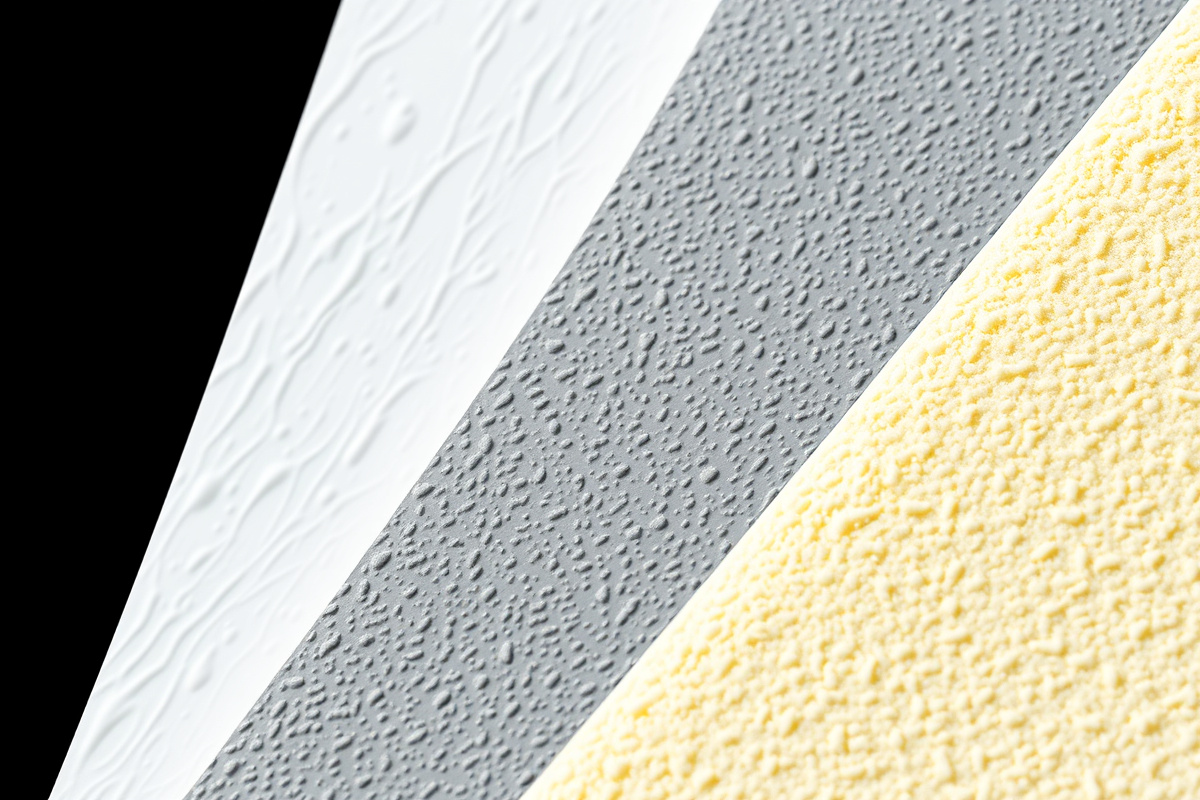
Acrylic / Elastomeric Coatings
Acrylic roof coatings are water-based and generally the lowest-viscosity, easiest-to-atomize category of the three covered here. Solids content varies by product — some run roughly 48% water to 52% solids by volume, others closer to 55% solids — and ASTM D6083, the standard specification for liquid-applied acrylic roof coatings, sets a minimum of 60% solids by weight / 50% solids by volume for compliant products.
Because viscosity is lower, acrylics can typically be sprayed with somewhat lower pressure and standard direct-drive or hydraulic airless pumps. GPM output tends to matter more than raw pressure here, since contractors are moving high coating volume across large flat roofs rather than fighting to atomize thick material.
Silicone Coatings
Silicone roof coating products tend to run a higher viscosity than acrylics, and as a result need considerably more pressure to break the material up properly at the tip. A published silicone spray guide from a coatings manufacturer specifies a high-pressure gun (5,000 PSI) with a reverse-a-clean tip, minimum 0.030" orifice, 50° fan angle, and the gun held 14"–20" from the roof surface.
Separately, spray-equipment industry sources note silicone often requires pumps in the 6,250+ PSI class and generally cannot run on standard direct-drive airless units — a 5:1 feed/transfer pump is commonly described as necessary to keep the main pump properly fed and avoid cavitation on thick material. Material temperature matters too: silicone is generally recommended to be kept at a minimum around 65°F to stay sprayable; colder material thickens and atomizes poorly.
Polyurethane Foam & Polyurea (Plural-Component)
Spray polyurethane foam (SPF) and many 2-part polyurethane/polyurea coatings are plural-component by design: an isocyanate ("A") side and a resin/polyol ("B") side are metered, heated, and mixed at the gun tip rather than pre-mixed in a pot. This isn't a viscosity problem an airless pump can solve — it's a chemistry constraint that requires purpose-built proportioning equipment.
Many plural-component chemistries, particularly polyureas, need component temperatures roughly in the 130°F–160°F range to hit correct viscosity for atomization and proper reaction/gel timing, delivered through heated hose runs — commonly cited 50–300 ft — that maintain temperature from pump to gun. Each component typically runs in its own hose, commonly ¼"–½" diameter depending on flow needs, to prevent premature reaction before the gun tip.
Relative pump-pressure demand
Acrylic runs lowest, silicone higher, and plural-component systems are a different equipment category entirely — not simply 'more pressure.'
Always confirm against the coating's TDS
Formulations vary by product and manufacturer, even within the same coating category. The technical data sheet for the specific product you're spraying is the authoritative source for pressure, tip size, and application specs — the ranges on this page are typical, sourced starting points, not a substitute for the manufacturer's own guidance.
Get personalized equipment buying help
Tell us about your coating type, job size, and current setup — we'll point you toward the equipment category and specs that actually fit, no brand pitch attached.