Plural-Component (2-Part) Rigs
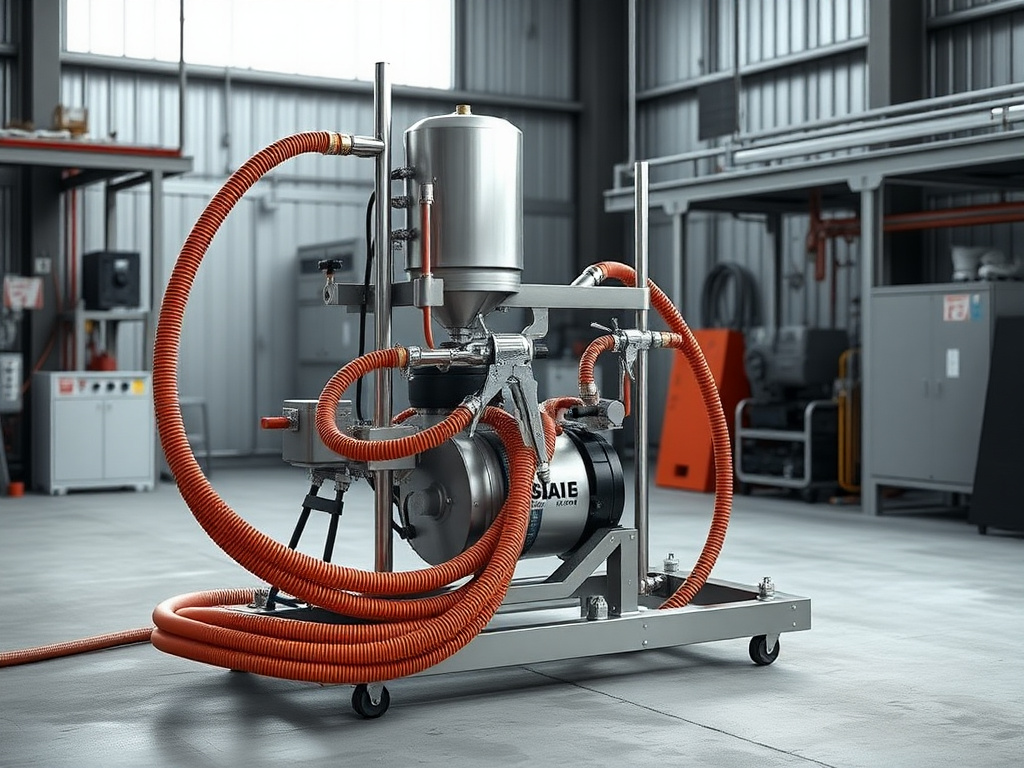
Plural-component equipment is fundamentally different from airless. Instead of spraying a single pre-mixed coating, it pumps two separate fluid streams — commonly called the A-side (isocyanate) and B-side (resin/polyol) — independently, meters them at a fixed ratio (often 1:1), heats each side, and combines them only at the gun tip.
This architecture is what makes spray polyurethane foam (SPF) roofing and true 2-part coatings like polyurea possible. It is not an upgrade path from airless — it's a different equipment category entirely, required whenever the coating system itself is reactive and two-part.
Why it works this way
- The only equipment architecture that can correctly proportion, heat, and mix reactive 2-part systems
- Heated hose keeps both components at the viscosity and reaction temperature the chemistry needs
- Purpose-built plural-component guns are designed specifically for on-the-fly A/B mixing at the point of application
Ideal for
- Spray polyurethane foam (SPF) roof substrate application
- True 2-part coatings — polyurea and certain 2-part polyurethane topcoats
- Contractors running a combined SPF-plus-topcoat roofing workflow, who typically need both a plural-component rig for the foam and an airless setup for the coating
Heated hose and component temperature
Many plural-component chemistries — polyureas in particular — need component temperatures roughly in the 130°F–160°F range to reach the right viscosity for proper atomization and correct gel/reaction timing. That heat has to be maintained from the proportioning unit all the way to the gun, which is why plural-component rigs run heated hose — commonly cited in runs from 50 to 300 feet depending on the job.
Losing heat anywhere along that run changes viscosity and reaction timing at the gun, which is why heated-hose integrity is one of the top maintenance priorities on these rigs, not an afterthought.
Metering ratio and hose separation
Plural-component systems typically spray in a lower pressure band than silicone-class airless work — commonly cited around 1,500–2,500 PSI — with each component running through its own dedicated hose, sized in the roughly ¼"–½" diameter range depending on flow requirements, to keep the two sides fully separated until they meet at the gun.
Any cross-contamination between the A-side and B-side before the gun tip — from a worn seal, a mixed-up hose, or contaminated equipment — risks a bad reaction (poor cure, off-ratio foam or coating) and is one of the most consequential failure modes on these rigs.
Typical ranges
Typical ranges — plural-component equipment is chemistry-specific; always follow the coating or foam system manufacturer's equipment guidance.
| Typical pressure range | Commonly cited around 1,500–2,500 PSI for many plural-component systems |
| Component temperature | Roughly 130°F–160°F is a commonly cited range for polyurea-class systems, maintained via heated hose |
| Coating types supported | Spray polyurethane foam (SPF), polyurea, certain 2-part polyurethane coatings |
| Hose | Heated hose, two separate lines (A-side / B-side), commonly ¼"–½" diameter depending on flow, runs commonly cited 50–300 ft |
| Cleanup | A/B sides must stay fully separated through cleaning; cross-contamination risk is the primary maintenance concern |
Plural-Component Rigs FAQs
No — most silicone roof coatings are single-component, pre-mixed products sprayed with a high-pressure airless (typically hydraulic piston) sprayer, not a plural-component rig. Plural-component equipment is for true 2-part systems: spray polyurethane foam and polyurea/2-part polyurethane coatings.
No. Spray polyurethane foam requires plural-component equipment with heated hose to proportion and mix the A/B foam components. The acrylic or silicone topcoat that typically goes over SPF roofing is a separate, usually single-component product sprayed with airless equipment — most SPF-plus-coating contractors run both equipment types.
Compare the other equipment category
Get personalized equipment buying help
Tell us about your coating type, job size, and current setup — we'll point you toward the equipment category and specs that actually fit, no brand pitch attached.