End-of-Season Sprayer Storage: Cleaning and Winterizing a Roof Coating Rig
The single biggest cause of a rig that won't start next season is water left in the system over winter. Here's the shutdown routine that avoids it.
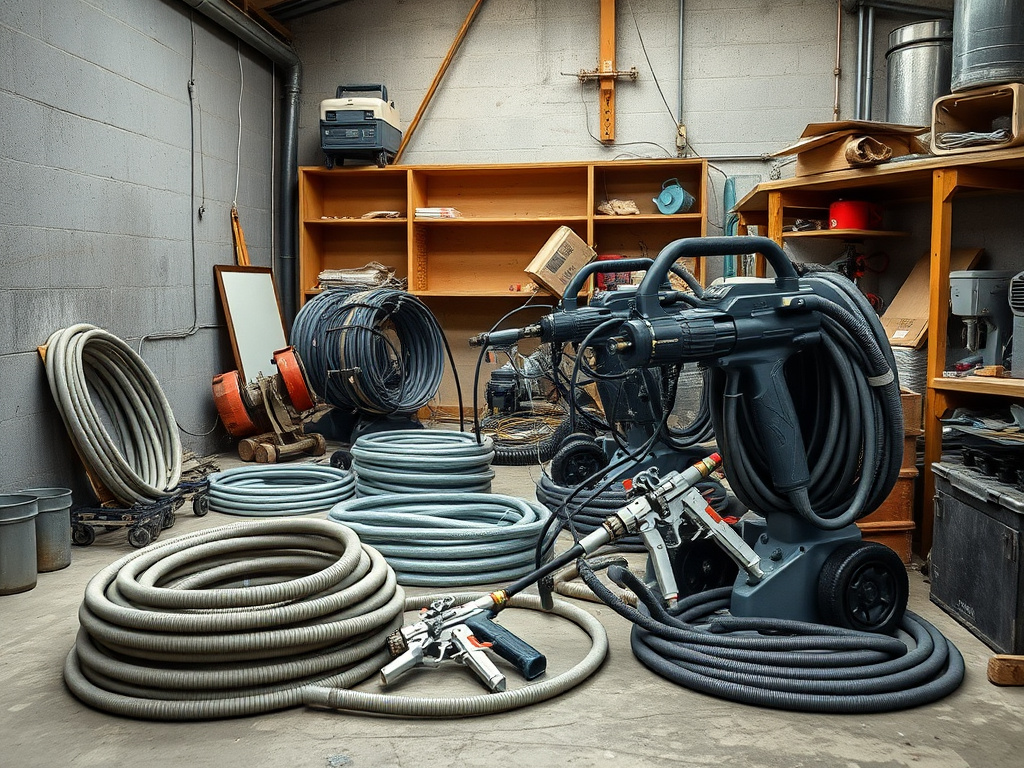
Flush before you do anything else
Run the coating manufacturer's recommended cleanup fluid through the system after every use, not just at end of season — water for water-based acrylics, or the specified thinner/cleaner for silicone and other solvent-cleanup products. Thick, high-build coatings often need repeated flush cycles to fully clear, so don't assume one pass got the system clean; run it until the fluid comes out visibly clear.
Never run two different chemistries through the same uncleaned system — switching from an oil-based or solvent-based product to a water-based one (or vice versa) without a full flush is a common, avoidable cause of gummed hoses and clogged filters.
Silicone gets its own equipment discipline
Silicone roof coating work is commonly handled with dedicated equipment kept separate from acrylic-line pumps and hoses, rather than cross-using the same rig for both chemistries. Silicone cleanup typically calls for a specially formulated thinner rather than a straight water flush, largely because silicone's moisture sensitivity makes standard water-based cleaning less reliable.
The winterization routine
Once the system is fully flushed clean, run a small amount of mineral spirits through as an anti-corrosive, anti-freeze measure before storage. The step that actually prevents most winter damage: make sure all water is completely drained from the system before freezing temperatures hit — water left in pump components, hoses, or the gun is the most common cause of cracked housings and seized pumps discovered at the start of the next season.
Remove and store guns, nozzles, and strainers clean and dry, separate from the rest of the rig, so they're not sitting in residual moisture over winter and are easy to inspect before the season starts back up.
Don't skip filters, seals, and tips
End-of-season is the right time for a full inspection, not just a flush. Clean or replace filters and screens so next season doesn't start with a clogged system. Check O-rings and seals for wear and replace anything questionable now, rather than mid-job next spring. And inspect tips for wear — a worn tip effectively enlarges the orifice over time, which shows up as an irregular or sputtering spray pattern that's easy to misdiagnose as a pump problem.
Plural-component rigs need extra care
Heated-hose and proportioning equipment carries additional considerations beyond a standard airless flush: keeping the A-side and B-side fully separated through the entire cleaning process, and checking heater and hose integrity before storage, since heat-run failures are a common cause of off-ratio material at startup next season. If your plural-component system has a specific manufacturer-recommended shutdown procedure, follow it over a generic airless routine — the two-component architecture has failure modes a standard airless flush doesn't address.
Related FAQs
Water left in the system before a freeze. Pump components, hoses, and guns that still have water in them when temperatures drop are the leading cause of cracked housings and seized pumps found at the start of the next season — full drainage matters more than almost any other winterization step.
Not quite — silicone typically needs a manufacturer-specified thinner rather than a straight water flush, and many contractors keep silicone equipment entirely separate from acrylic-line pumps and hoses rather than cross-using the same rig for both chemistries.
Get personalized equipment buying help
Tell us about your coating type, job size, and current setup — we'll point you toward the equipment category and specs that actually fit, no brand pitch attached.